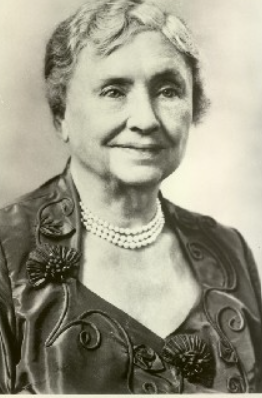
When most people hear the name Helen Keller, they picture a young girl at a water pump, finally grasping the connection between the cool liquid rushing over her hands and the word her teacher was spelling into her palm.
While that moment was undeniably profound, it was only the beginning. Helen Keller did not just learn to communicate; she rose from near-total isolation to become one of the most powerful and pioneering voices of the 20th century.
The Silence and the Breakthrough Born in Tuscumbia, Alabama, in 1880, Helen’s life changed drastically at just 19 months old. A severe illness—likely scarlet fever or meningitis—left her both deaf and blind. Unable to communicate, she was trapped in a silent, dark world.
Everything changed in March 1887 with the arrival of Anne Mansfield Sullivan. A recent graduate of the Perkins School for the Blind, Sullivan brought immense patience and innovative methods. That famous day at the water pump wasn’t just about learning the word “W-A-T-E-R”; it was the moment Helen realized that the world could be named, understood, and engaged with.
A Voice for the Voiceless With Sullivan by her side, Helen proved that sensory disabilities were not a barrier to intellect. She attended specialized schools and eventually shattered a massive glass ceiling by entering Radcliffe College. In 1904, she became the first deaf-blind person to earn a Bachelor of Arts degree, graduating cum laude.
But Helen wasn’t content to simply exist as an inspiration; she wanted to change the world. She introduced readers to her inner life by publishing The Story of My Life in 1903, eventually writing over a dozen books and hundreds of essays.
More importantly, she used her massive public platform for fierce advocacy. Helen was a suffragist, an early supporter of the NAACP, a member of the ACLU, and a dedicated Socialist. She lectured internationally for over five decades, fiercely campaigning for:
- Women’s rights
- Labor laws
- Racial justice
- Education and employment access for people with disabilities
Why Helen Keller Matters Today Helen Keller’s story completely transformed special education. She proved to the world that tactile language and individualized teaching could unlock human potential.
But her true, lasting legacy is how she connected disability rights to broader social movements. Long before it was a mainstream concept, Keller understood intersectionality. She showed the world that access, labor rights, and racial justice are deeply linked—a message that remains just as vital today as it was a century ago.
Helen Keller: A Quick Timeline
- 1880: Born on June 27 in Tuscumbia, Alabama.
- 1887: Anne Sullivan arrives, leading to the breakthrough at the water pump.
- 1903–1904: Publishes The Story of My Life and graduates from Radcliffe College.
- 1910s–1960s: Travels the globe as an active lecturer, writer, and campaigner for civil liberties.
- 1964: Awarded the Presidential Medal of Freedom.
- 1968: Passes away on June 1, leaving behind a globally transformed society.
Leave a Reply