Throughout history, the quest for beauty has rarely been painless—and all too often, it has been outright lethal. Long before modern toxicology and consumer safety laws, looking desirable meant rubbing heavy metals, caustic chemicals, and even radioactive elements directly into the skin.
Here is how humanity spent millennia poisoning, burning, and reshaping itself in the name of fashion.
Ancient World: Toxic Minerals & Caustic Depilatories
- c. 3500–3000 BC (Mesopotamia): The world’s earliest lipsticks blended crushed red pigments with white lead. Without any concept of heavy-metal toxicity, vivid colors were prioritized over biological safety.
- c. 3000–1500 BC (Ancient Egypt): Egyptian kohl created signature dramatic eyes, but many recipes relied on galena (lead sulfide) and malachite. While it offered practical benefits like reducing desert sun glare and fending off bacterial eye infections, it quietly exposed wearers to chronic lead absorption.
- c. 1500 BC–400 AD (Greece & Rome): Hairless, pristine skin was a hallmark of elite status. Depilatory pastes frequently utilized caustic quicklime and arsenic compounds, leading to severe chemical burns. Meanwhile, Roman skin powders and rouges routinely incorporated lead and mercury.
Middle Ages to the 1700s: The Deadly Price of Porcelain Skin
- Medieval Europe (500–1500): While the Church viewed cosmetics with moral suspicion, wealthy households still traded beauty concoctions. Formulations mixed herbal medicine with superstition, animal bile, and toxic minerals.
- The Renaissance & Venetian Ceruse (1500s–1600s): Aristocrats prized ghostly white skin as proof they didn’t labor outdoors. Enter Venetian ceruse, a lead carbonate paste applied to the face and neck. It created a porcelain finish while causing hair loss, rotting teeth, skin lesions, and irreversible neurological decay.
- 1700s Elite Glamour: Both aristocratic men and women layered thick lead makeup, heavy rouge, and silk beauty patches—often using the patches to conceal the very scars and sores caused by their cosmetics.


The 19th Century: Victorian Erasures & Arsenic Wafers
- The War on Freckles: The Victorian ideal demanded translucent, blemish-free skin. Commercial creams promised to erase freckles and redness using mercury, bismuth, and lead.
- Arsenic Wafers: In one of the era’s most bizarre trends, consumers ingested arsenic-laced wafers or washed with arsenic soaps. Arsenic constricts blood capillaries, creating a temporary, pale transparency—at the cost of slow, systemic internal poisoning.
Early 20th Century: Radiation, Corsets & Regulatory Awakening
- Extreme Silhouettes (1900s–1920s): Tight-laced corsets crushed internal organs and severely restricted breathing to compress waists into fashionable, unnatural hourglass shapes.
- The Radium Craze (1910s–1930s): Following Marie Curie’s discovery, radioactivity was marketed as a miracle tonic for youth. Creams, lipsticks, and radioactive waters promised an “energizing glow” until horrific tissue decay and fatal radiation poisoning ended the fad.
- Lash Lure & The “Chamber of Horrors” (1933): Synthetic dyes flooded an unregulated market. Lash Lure, an aniline-based eyelash dye, caused chemical ulcers and blinded multiple women. Public outrage helped spur the landmark Federal Food, Drug, and Cosmetic Act of 1938, giving the FDA oversight of cosmetics for the first time.

Mid-to-Late 20th Century: From Chemical Tanning to the Scalpel
- 1950s–1970s (The Tanning Obsession): Bronzed skin replaced paleness as a status symbol of leisure. The introduction of indoor tanning beds subjected millions to concentrated UV radiation, exchanging short-term tans for accelerated photoaging and soaring melanoma rates.
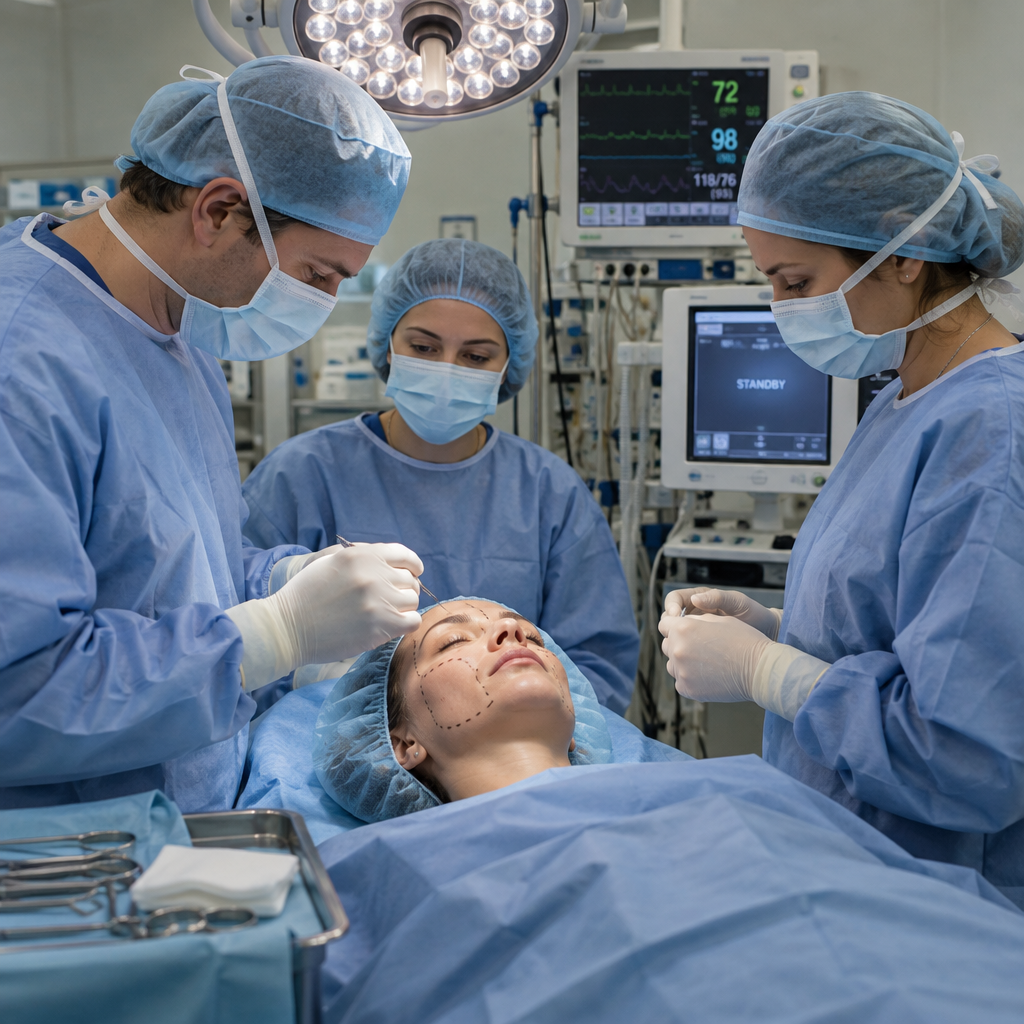
- 1970s–1990s (Surgery & Injectables): The industry shifted from painting the body to physically altering it. Silicone implants, liposuction, and bovine collagen injections introduced surgical risks like severe infections, tissue necrosis, and nerve damage.
- The Botox Paradox (1990s–2000s): Botulinum toxin—one of the deadliest known neurotoxins—became a mainstream cosmetic staple. It epitomized a central truth of modern cosmetology: the line between a lethal poison and an anti-aging cure is often just a matter of microscopic dosage.
21st Century: The Digital Mirror & Modern Hazards
- The Instagram Face (2010s): Social media filters reshaped real-world aesthetic standards. Dissolvable fillers, thread lifts, and invasive surgeries (like buccal fat removal and Brazilian butt lifts) surged as people sought to mirror edited digital avatars in real life.
- The Lingering Threat (Today): Despite modern testing and regulation, black-market and imported cosmetics remain a real hazard. In major online marketplaces, regulatory bodies and investigative reports still routinely discover prohibited skin-lightening creams containing dangerous concentrations of mercury. Furthermore, under U.S. law, everyday cosmetics generally do not require pre-market FDA approval before reaching store shelves.
The Bottom Line
Whether it’s Mesopotamian lead lipstick, Victorian arsenic wafers, or black-market injectables, the biological hazards of cosmetics have evolved alongside technology. The aesthetic ideals constantly shift, but the underlying motivation remains untouched: when society convinces people that their natural appearance is flawed, there is almost no chemical, toxin, or knife they won’t brave in pursuit of acceptance.
Leave a Reply